Date Safely and Confidently in Cardiff

Practical, local advice for checking profiles, protecting your privacy and planning safer first meetings across Cardiff and nearby areas.

You have agreed to meet outside Cardiff Central at six. Then, an hour before, the story changes: their phone is broken, they cannot video call, and could you pay for a taxi from Barry? That combination matters far more than whether their profile has a blue tick or a convincing photograph.

Good dating safety is rarely about spotting one dramatic warning sign. It is about noticing several small things that do not quite fit, keeping control of your personal information and arranging the first meeting so that you can leave easily. Cardiff helps. The centre is compact, busy venues are close together, and Penarth, Caerphilly, Dinas Powys and Barry all have public transport links into the city. Still, a short journey does not remove the need for a plan.

What does safe online dating in Cardiff actually involve?

Safe online dating means checking that a person's story is consistent, protecting private information and meeting in a public place with your own route home.

No check can certify that a stranger is trustworthy. Think of safety as several ordinary locks on one door. A complete profile is one lock. A short video conversation is another. Telling a friend where you are going, meeting in public and controlling your transport add more. None is perfect alone; together they make manipulation harder and give you room to act if something feels wrong.

This guide covers the full process, from the first message to the journey home. It applies whether you are new to Cardiff dating, returning after a long relationship or simply tired of profiles that turn out to be nowhere near Cardiff. Being cautious is not cynical. It is practical.

  • Check gradually. Look for consistency across photographs, conversation, location and everyday details rather than relying on a badge.
  • Keep boundaries simple. You do not owe anyone your surname, address, workplace, intimate photographs or immediate attention.
  • Plan independently. Choose a public venue, tell someone your plan and arrange transport you can control.
  • Respond early. Blocking, reporting or leaving does not require a courtroom level of proof.

The aim is not to remove every risk. It is to keep enough control that a poor decision by someone else does not trap you.

Checking Profiles and Conversations

A polished profile can be genuine, copied or carefully manufactured. An awkward one can belong to a perfectly decent person. The useful question is not, “Does this look impressive?” It is, “Does this person behave consistently over time?”

How can I tell whether a Cardiff dating profile is genuine?

Check whether the profile's photographs, local knowledge, timeline and conversation form one believable and consistent picture.

Start with the basics. Does the stated age broadly fit the photographs? Does their job make sense alongside the hours they claim to work? If they say they live in Canton but repeatedly describe a lengthy journey into central Cardiff, ask a neutral follow-up. A real resident does not need to pass a local knowledge examination, and newcomers will naturally know less. You are looking for normal, unforced detail rather than trivia.

Ask open questions that a genuine person can answer without effort: what brought them to Cardiff, what they like doing on a wet weekend, or whether they normally travel into town by bus, train, bike or car. Do not demand a photograph beside a landmark. That can become controlling and proves little. A scammer can search for Cardiff details, while an honest person may have privacy reasons for keeping their exact neighbourhood vague.

  • Read the whole profile. Generic claims such as loving travel and laughter reveal little. Specific, ordinary details are easier to discuss and harder to maintain dishonestly.
  • Notice abrupt contradictions. One mistake may be nothing. Repeated changes in name, age, family situation, work or location deserve attention.
  • Look at the language shift. Messages suddenly becoming much more polished, formal or romantic can indicate copied scripts or a different person taking over the conversation.
  • Check photographs carefully. A reverse-image search may reveal a public figure, stock image or another name. Remember that uploading an image to a search service has privacy implications of its own.
  • Suggest a short call. A voice or video call can show that someone resembles their photographs and can hold a live conversation, although it cannot prove good intentions.

Practical check: before agreeing to meet, ask one ordinary follow-up about something mentioned several days earlier. Genuine conversations usually have a natural thread. Scripted approaches often ignore it and return to compliments, urgency or money.

Does profile verification mean someone is safe?

Profile verification may confirm control of a photograph or account, but it does not confirm character, identity in every legal sense or future behaviour.

Verification is useful, just limited. Its meaning also varies between services. On one site it may involve copying a pose; elsewhere it could involve an identity document. Read what the particular mark actually represents. Never treat it as permission to abandon other checks.

A video call has similar limits. It can expose stolen photographs, but a real face can still belong to someone who lies, pressures or asks for money. Equally, refusing one call is not automatic proof of deception. Some people share a home, work shifts, have poor signal or feel uncomfortable on camera. In reality, it depends on the explanation and whether they offer a sensible alternative.

Which early behaviours should Cardiff singles take seriously?

Take seriously any pattern of pressure, inconsistency, sexual boundary testing, secrecy or attempts to isolate you from outside advice.

Watch behaviour, not charm. A respectful person can hear “not yet” without treating it as a negotiation. They will not punish you for replying slowly, insist you leave the platform immediately or demand proof that you trust them.

  • Instant intensity. Strong declarations before you have met can be used to speed past your judgement.
  • Boundary testing. Sexual questions, repeated requests for photographs or jokes after you have said no are not harmless if they continue.
  • Engineered secrecy. Be wary if someone says friends would not understand, asks you to hide the contact or becomes hostile when you mention checking in with someone.
  • Unclear availability. A person who is never available at ordinary times and cannot explain why may be concealing a relationship or identity.
  • Location drift. Someone presented as local who later turns out to be temporarily abroad, offshore or unable to meet should be treated as unverified.

People are allowed to be nervous, private or poor at messaging. Do not mistake social awkwardness for danger. The distinction is response: a nervous person can still respect a boundary; a manipulative person tries to make the boundary your fault.

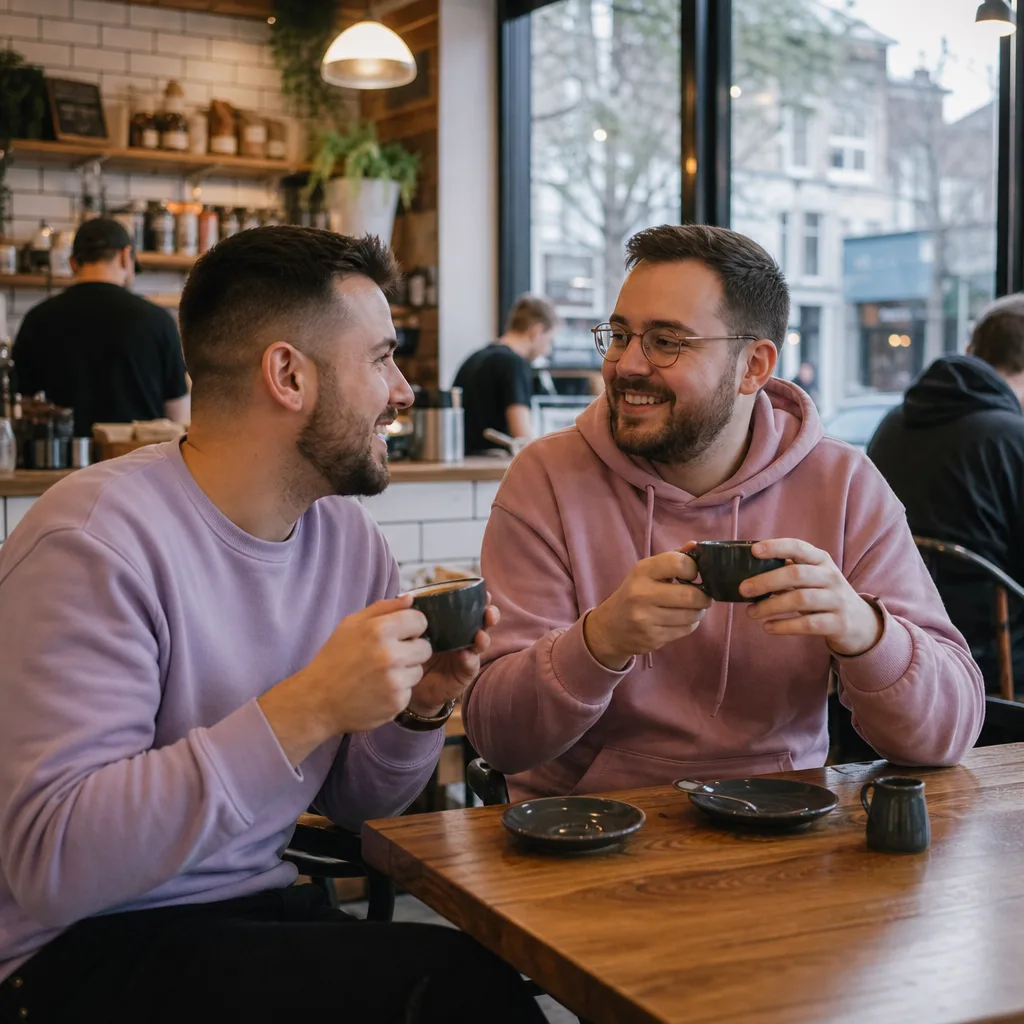
Person reviewing a dating profile and messages on a phone at a Cardiff café

Scams, Privacy and Digital Boundaries

Most Cardiff dating scams do not begin with a request for money. They begin with attention. The fraudster builds a small private world, then introduces a crisis that only you can solve. By that point, the request can feel like helping someone you know rather than paying a stranger.

What are the most common warning signs of Cardiff dating scams?

Common warning signs include rapid emotional attachment, excuses for never meeting, movement away from the dating service and any request involving money, accounts or financial details.

The local label may be the bait. A profile can claim to live in Cardiff Bay, study near Cathays or work away from home without any of it being true. Do not assume that mentioning a real place makes someone local. A fraudster needs only a map and a few minutes of searching.

  • A sudden emergency. Hospital costs, travel problems, frozen accounts, stolen phones and family crises are common routes to a payment request.
  • A promised meeting that needs funding. Do not pay fares, fuel, hotel costs, visa fees or deposits for someone you have not met and independently verified.
  • Investment coaching. A dating contact who introduces cryptocurrency, foreign exchange or a supposedly private opportunity is mixing romance with financial pressure.
  • Use of your bank account. Receiving or forwarding money can involve stolen funds and expose you to serious consequences, even if you were told it was a favour.
  • Gift cards or codes. Requests for vouchers, phone credit, login codes or one-time security numbers should end the conversation.
  • Threats involving intimate images. Sextortion relies on panic and speed. Preserve evidence, stop engaging and seek police or specialist support rather than paying.

Never send money or financial access to an online dating contact you have not independently verified. That includes loans, cryptocurrency, account details, verification codes and allowing payments to pass through your account. If you have already paid, contact your bank immediately; speed can affect whether a transfer can be stopped.

Shame keeps scams alive. Capable, careful people are caught because the approach exploits trust, loneliness and urgency, not because victims lack intelligence. If something has happened, tell your bank, report the account to the dating service and contact police. Keep screenshots, usernames, phone numbers, payment references and dates.

How much personal information should I share before meeting?

Share enough for a normal conversation, but keep your home address, workplace details, routine, financial information and account security private.

Privacy is not the same as secrecy. You can say that you work in healthcare without naming the ward, or that you live near Caerphilly without giving a street. The goal is to prevent separate scraps of information being assembled into a map of your life.

Photographs can reveal more than expected. A work lanyard, school uniform in the background, street sign, car registration or view from a window can identify you. Reusing the same photograph across dating and public social accounts may also make your full name easy to find through image search.

  1. Limit your profile. Use your first name or the naming format allowed by the service, a broad area and photographs without identifying documents or locations.
  2. Separate communications. Stay on the dating service until you are comfortable. If you move, consider privacy settings that hide your profile photograph, last-seen status or surname.
  3. Review social accounts. Check what a stranger can see, including tagged images, friends lists, employer, birthday and regular locations.
  4. Protect every login. Use a unique password and enable two-factor authentication where available. Never share a sign-in or verification code.
  5. Keep evidence if needed. Before blocking a threatening account, save relevant messages and profile details in case the platform, bank or police asks for them.

If discretion matters because of work, family, an ex-partner or your sexuality, say only what feels safe. LGBTQ+ members may face specific risks around outing or blackmail. Our page for gay men in Cardiff can help with finding locally relevant connections, but the same rule holds: nobody is entitled to expose private information.

Should I leave the dating site to message someone?

Stay on the dating service until you are comfortable, because moving too quickly can expose personal details and reduce the evidence available to moderators.

There is nothing inherently unsafe about exchanging numbers. The catch is timing. In-platform reporting tools and message records may be easier to use while the account remains active. A phone number can also connect to messaging photographs, social profiles or payment services.

If somebody insists that the app is broken, their membership is expiring or they can only speak on an encrypted service, slow down. A reasonable person can usually wait. Check your own service's subscription and cancellation terms directly rather than trusting claims made by another member. Billing questions should go through the platform's official support route, never a link sent in chat.

Close view of a phone displaying a suspicious dating message asking for money

Planning a Safer Cardiff Meeting

A safer first date is deliberately ordinary. Public place. Clear start time. Easy exit. You are not designing an impressive evening; you are creating a low-pressure setting in which two people can decide whether they would like another conversation.

Where should I meet for a first date in Cardiff?

Meet in a familiar, staffed public venue with other people nearby, reliable phone signal and more than one practical route home.

Cardiff offers plenty of sensible choices. Chapter Arts Centre in Canton is a real, staffed venue with a café-bar and regular footfall. Cardiff Central Market is central and busy during its opening hours, while the city centre around The Hayes has cafés, shops and transport nearby. Always check current opening times, accessibility and events before setting off.

A daytime walk can sound relaxed, but the route matters. Bute Park is central and popular, yet large green spaces become quieter and darker after hours. For a first meeting, begin somewhere staffed and public. You can choose a walk later if both people are comfortable and conditions are suitable.

Meeting optionUseful featurePoint to check
Busy caféStaff, short format and an easy exitOpening time and evening footfall
Museum or galleryPublic setting and natural conversationClosing time and any ticket requirement
Market or daytime food hallCentral location and plenty of peopleTrading hours and seating availability
Pub or barStaffed venue with evening openingAlcohol limits, noise and transport home
Park or waterfront walkOpen-air, informal meetingDaylight, weather, route and quieter sections

Do not let “local” become “at home”. Inviting someone to your flat, accepting a lift or meeting in a secluded place removes useful layers of control. The same applies if they live in Penarth, Barry, Dinas Powys or Caerphilly. A few friendly messages do not make a private address a suitable first venue.

How do I make a first-date safety plan?

Choose the venue and end time in advance, tell a trusted person, keep control of transport and leave whenever you want.

  1. Confirm the basics. Agree on the exact venue, entrance and time rather than a vague plan to meet somewhere in town.
  2. Tell one person. Share the profile name, meeting place, expected finish time and any phone number you have.
  3. Arrange a check-in. Choose a realistic time to message your contact, plus a clear action if you fail to respond.
  4. Travel independently. Keep enough battery and money for a bus, train or licensed taxi, and avoid relying on your date for a lift.
  5. Set a short first meeting. Coffee or one drink gives you a natural finish. You can extend it if both of you genuinely want to.
  6. Leave plainly. You do not need an elaborate excuse. “I am going home now” is a complete decision.

Cardiff's events calendar can change the practical picture quickly. A match day or concert at the Principality Stadium can mean busy trains, road closures, crowded streets and long taxi waits around Cardiff Central. Check the stadium schedule and live travel information before meeting in the centre. The same journey that is simple on a quiet Wednesday may be awkward on an international rugby weekend.

Cardiff Bus and Transport for Wales timetables vary by route, day and disruption. Check the final service yourself rather than relying on your date's estimate. If travelling from the city ring, build in a backup and wait in a well-lit, populated place.

Consent must be freely given, specific, informed and reversible, and alcohol never turns uncertainty or silence into agreement.

Choose your own limit before the meeting. Keep your drink with you, do not accept an opened drink from a stranger and ask venue staff for help if you think it has been interfered with. Alcohol can affect judgement and your ability to travel, so water, food or a non-alcoholic choice may be the better call. There is no obligation to drink because the meeting is in a bar.

Consent applies to every stage: physical contact, photographs, sexual conversation, sharing a taxi and going somewhere private. Agreement to one thing is not agreement to the next. It can be withdrawn at any point. A respectful date will not sulk, bargain or suggest that paying for drinks created a debt.

  • Ask rather than assume. A simple question is clearer than trying to read body language alone.
  • Treat hesitation as a pause. If someone freezes, goes quiet or pulls away, stop and check in.
  • Respect changed minds. Consent given earlier can be withdrawn without explanation.
  • Keep transport separate. Sharing a taxi does not imply an invitation to enter someone's home.

Anyone can experience harassment, coercion or assault, regardless of age, gender or sexuality. Anyone can also practise clear consent. Cardiff singles safety improves when boundaries are treated as normal conversation, not as accusations.

What should I do if I feel unsafe during a date?

Move towards staff or other people, contact someone you trust, leave by your own route and call 999 if there is immediate danger.

Trust discomfort before you can fully explain it. If behaviour changes, your drink tastes unusual or you feel watched, pressured or unable to leave, act early. Go to the bar, reception, ticket desk or security staff. Say directly that you need help getting away from the person you are with.

If possible, take your belongings, but do not delay leaving to recover a coat or finish a conversation. Contact your check-in person. Use a licensed taxi booked through a known operator or app, or move to a staffed transport point. Do not let the other person follow you home “to make sure you are safe”.

Call 999 when a crime is happening, someone is in immediate danger or urgent police or ambulance help is needed. For non-emergency police matters, South Wales Police can be contacted on 101 or through its official online channels. NHS 111 Wales provides urgent health advice when the situation is not a 999 emergency. Service details can change, so use official websites when you are able.

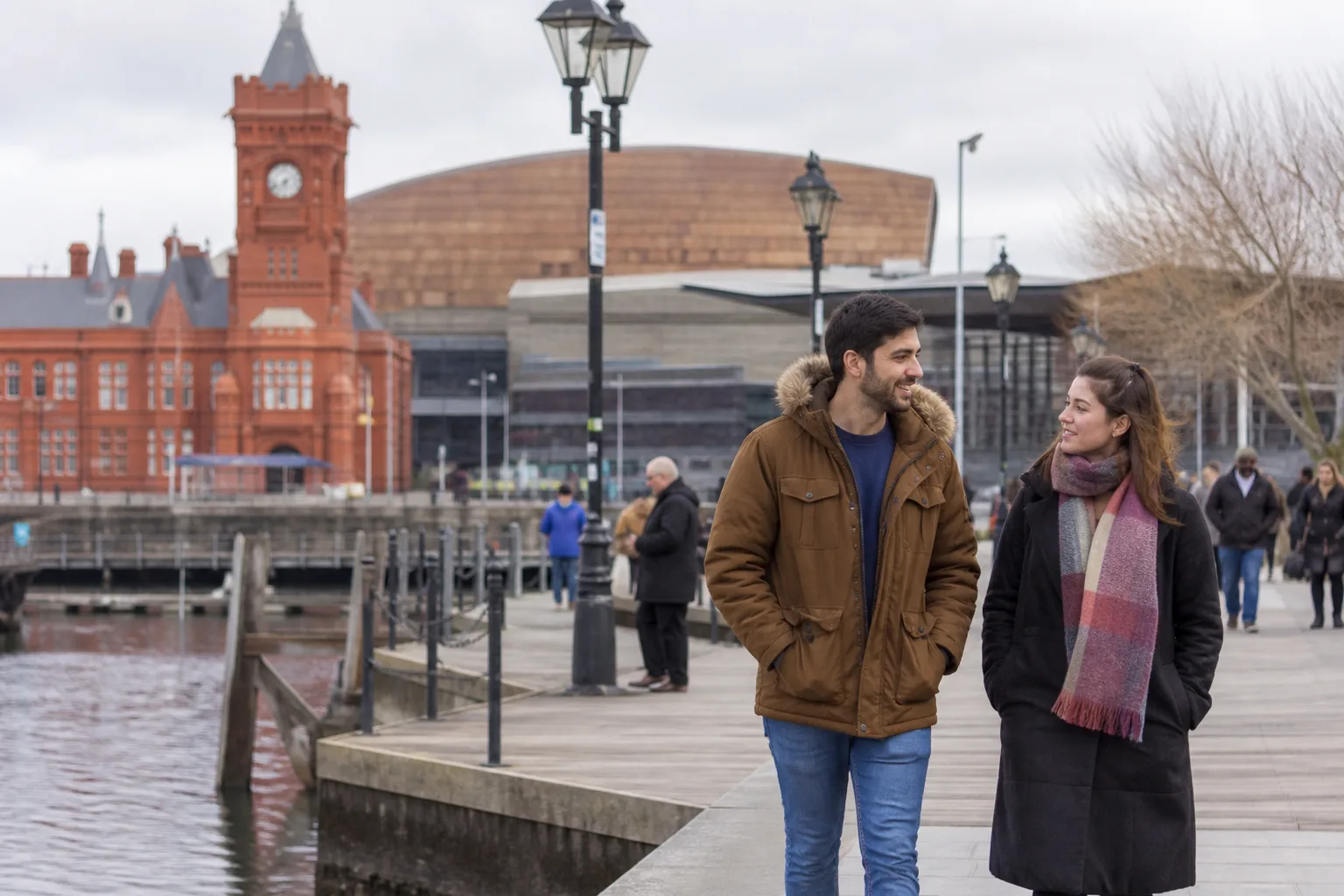
People meeting at a busy staffed venue near Cardiff city centre

Online dating safety in Cardiff is not a talent that some people have and others lack. It is a routine: check, pause, plan and retain control. That routine works just as well for someone aged 25 who has moved to Cathays as it does for someone aged 65 who is dating again after decades.

What should I do after the first meeting?

Check in with your trusted contact, record or report concerning behaviour and decide on another date only after you have had space to think.

Send the promised message when you are safely home. If the date was fine but you do not want another, a brief and clear reply is usually enough. You do not owe a detailed defence. If saying no may provoke anger, prioritise safety: block the person, adjust privacy settings and tell somebody what has happened.

Report threats, impersonation, financial requests, harassment or suspected fake profiles to the dating service. Reports help moderators see patterns that one member cannot. Keep relevant screenshots before the account disappears. If money was involved, contact your bank quickly and report the matter to the police or the UK's official fraud-reporting route current at the time.

For future meetings, review what worked. Was the venue easy to find? Did your check-in time make sense? Was the route home reliable? Small improvements matter. If you want ideas for public social settings, browse singles events in Cardiff, checking each organiser's current safety arrangements and venue details yourself.

Safe dating Cardiff advice can sound like a long list because risks vary. The core is shorter: do not send money, do not surrender your privacy too quickly, meet publicly, keep your own way home and take pressure seriously. A genuine local connection can withstand sensible caution.

Frequently asked questions

Is it safe to meet someone from a Cardiff dating site?

It can be, but no site or verification badge can guarantee another person's behaviour. Check their story over time, have a short call if useful, meet in a busy staffed venue, tell someone your plan and control your journey home.

Where is a safe place for a first date in Cardiff?

Choose a familiar, staffed public venue with reliable transport and other people nearby. A busy café, museum, gallery or central daytime venue can work well. Check opening times, accessibility and major events at the Principality Stadium before travelling.

What should I do if a dating contact asks me for money?

Do not send money, cryptocurrency, gift cards, bank details or security codes. Save the messages, report the profile and stop contact. If you have already paid, contact your bank immediately and report the incident through official police or fraud-reporting channels.

Meet Local People Without Rushing the Important Bits

Create a free profile, keep your boundaries clear and get to know Cardiff singles close enough to meet in person when you are ready.

Create My Free Profile